Driving AI culture is about leadership, not management
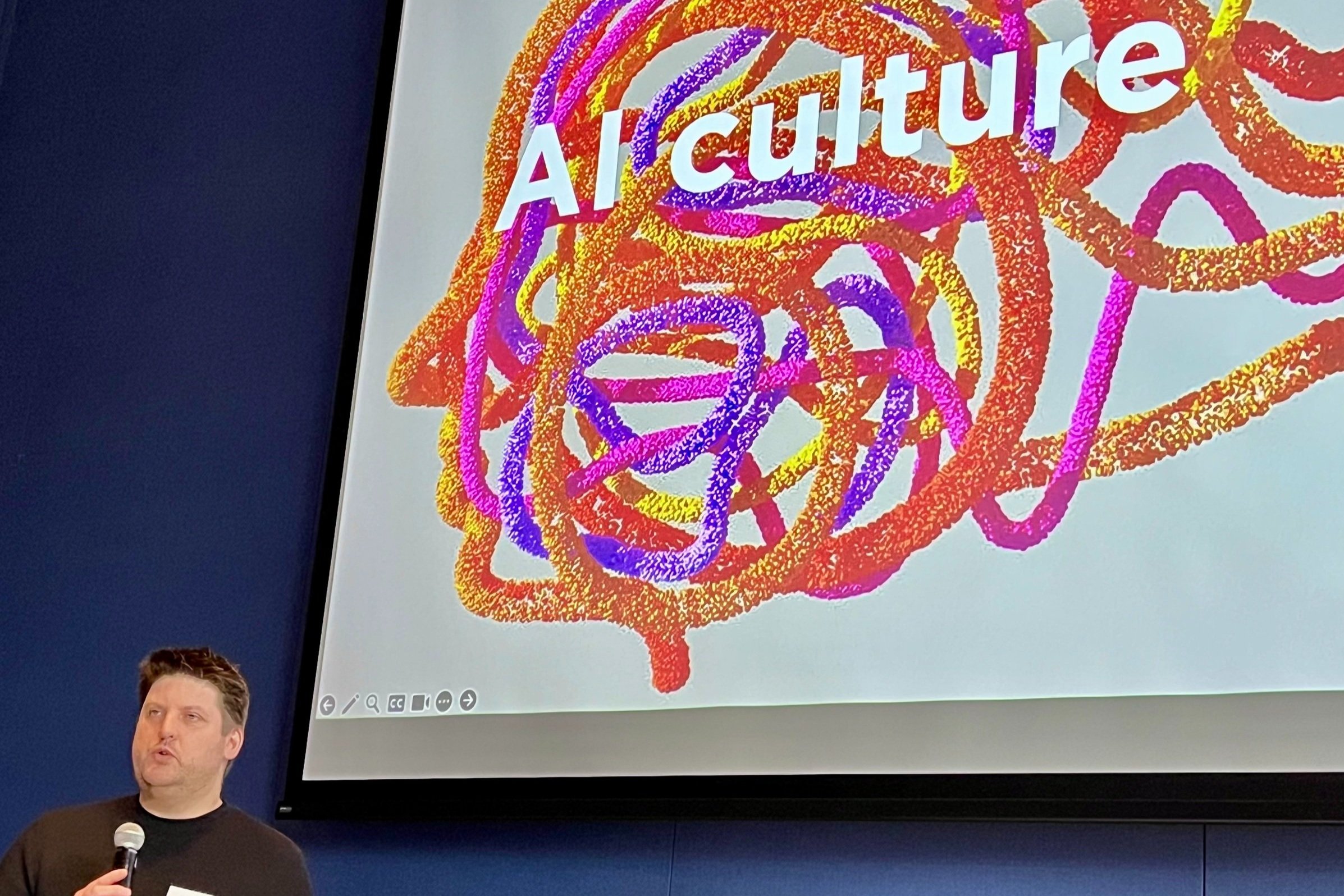
I recently moderated a session on AI culture at the annual PROI EMEA AI Summit in Warsaw, Poland where Wildfire and other panellists were invited to share our experiences.
It was a lively conversation. But there was one particular soundbite that has really stuck in my head ever since: “Driving AI culture is about leadership, not management. ” (Take a bow, Manuel Stark).
It’s such an important point, which, until that moment, I’d hugely overlooked. AI is massively transforming how we work, but adopting the technology is only half the challenge. The real work lies in embedding AI into the fabric of agency culture — and that’s a leadership issue, not a management one.
What’s the difference?
Management is largely about process — things like budgets, roadmaps, and compliance. Leadership, on the other hand, is about mindset: vision, behaviour, values. So when it comes to AI, a change in culture can’t be enforced from the top down just with a policy document or some shiny new training modules. It must be inspired, modelled, and lived by leaders.
The agencies making the smartest moves in AI aren’t the ones with the most sophisticated tools — they’re the ones where leadership has created the conditions for curiosity, experimentation, and responsible innovation. They understand that driving an AI culture means encouraging teams to explore, learn, and adapt, not just execute.
What does good AI leadership look like?
It starts with asking better questions. Not only “Which AI tools should we use?” but “How might AI help us create more value to clients?”, “What skills will our team need in two years?”, and “How can we use AI ethically and transparently to futureproof the agency?”.
AI leaders must foster psychological safety so that people feel comfortable testing ideas and challenging assumptions. They must celebrate progress, not just perfection. And crucially, they must lead with humility — because as I know all too well, no one has all the answers when it comes to AI and its evolution over the coming years.
Communication plays a pivotal role.
Internally, leaders need to bring people together on their AI journey. That means clear, consistent messaging, storytelling that humanises AI, and dialogue that makes space for questions and concerns. Externally, agencies must signal that they’re not just playing with the latest tech — they’re thinking deeply about its impact and value.
So where to start?
A clear vision and strategy: how do you see AI helping your organisation thrive?
Create space for experimentation: don’t make AI its own department. Give everyone the freedom to explore tools and share their learnings
Reward AI curiosity and initiative properly
Breed transparency so that people share what they’re learning and where they’re struggling
AI will definitely play a big role in shaping the future of PR — but culture will determine the agencies who thrive. Leaders set the tone. They don’t need to be technical experts, but they do need to show courage, clarity, and curiosity.
That’s the real engine behind any successful AI journey. And while I don’t claim to be the perfect role model yet, this is something that I’ll be doing my damned best to embody from now on.