Differentiation matters: what CMOs really want from tech brands
MarTech has a marketing problem.
These brands sell tools designed to help marketers understand audiences, sharpen targeting, improve performance, and create more effective campaigns.
And yet, when it comes to targeting their own audience, CMOs and other senior marketers, too many of them blend into the same category noise. Me-too ‘the state of something’ reports. Endless, but meaningless, product updates. A reliance on playing the Magic Quadrant/Wave game.
This isn’t my gut telling me this. This is CMOs themselves.
Interested… but underwhelmed
As part of our new Decoded research series, Wildfire recently commissioned a survey of 100 UK CMOs to better understand how they discover, evaluate, and buy marketing technology.
And this irony — of marketing and advertising tech brands failing to communicate with marketers — jumps out of the data.
But that’s not even the stupidest thing we found.
As the Decoded research highlights, the problem is not that CMOs aren’t interested in technology. Quite the reverse. 96% want to work with tech providers who are genuine thought leaders. 78% say adopting new technology before competitors is important to them. 70% actively look for innovative or emerging technologies.
No, the problem is that too many brands are wasting that appetite. 56% of CMOs say all tech providers look and sound the same. 60% say they rarely surprise them with their marketing. And 63% say vendors focus too much on product features instead of real business outcomes.
In other words: CMOs are listening but too many MarTech and AdTech brands are not giving them a reason to care.
The missing ingredient is differentiation
For me, this is the clearest lesson from CMO Decoded: differentiation matters.
That’s not because “standing out” is nice in theory. No, CMOs are explicitly saying that they want to work with brands that bring something different to the table.
96% said they want to work with bold and creative tech brands. When asked what content is most useful when considering a tech purchase, the top answer was not product updates, partnership announcements, or compliance badges. It was unique opinions on the industry.
That should be a wake-up call for MarTech and AdTech brands: Differentiation is not just a ‘preference’. It is part of how these tech buyers evaluate credibility, relevance, and fit.
Known for what?
The lesson might be clear. But many brands still haven’t got the message.
All too often, the attempt to achieve differentiation becomes a game of Buckaroo: more messages, more claims, more creative flourishes, more reasons to believe. The result? Less interest. In our research, 56% of CMOs said tech brands “make their products sound more complex than they need to be”.
A useful example from a completely different sector comes from Mark Ritson’s recent piece on Crypto.com.
This is a brand that has spent over a billion dollars on ads with Matt Damon, stadium sponsorships, and Super Bowl spots. And yet its competitors now have higher revenues and more users. How can this be?
As Ritson argues, the answer is not that Crypto.com failed to build awareness. It is that its competitors built clearer meaning. Coinbase became associated with legitimacy. Binance with global scale and speed. Crypto.com undoubtedly has visibility, but no clear answer to the question: “Known for what?”
As Ritson goes on to argue, real differentiation is often simpler than marketers want it to be. Volvo owns safety. BMW owns driving performance. Dyson owns engineering-led design.
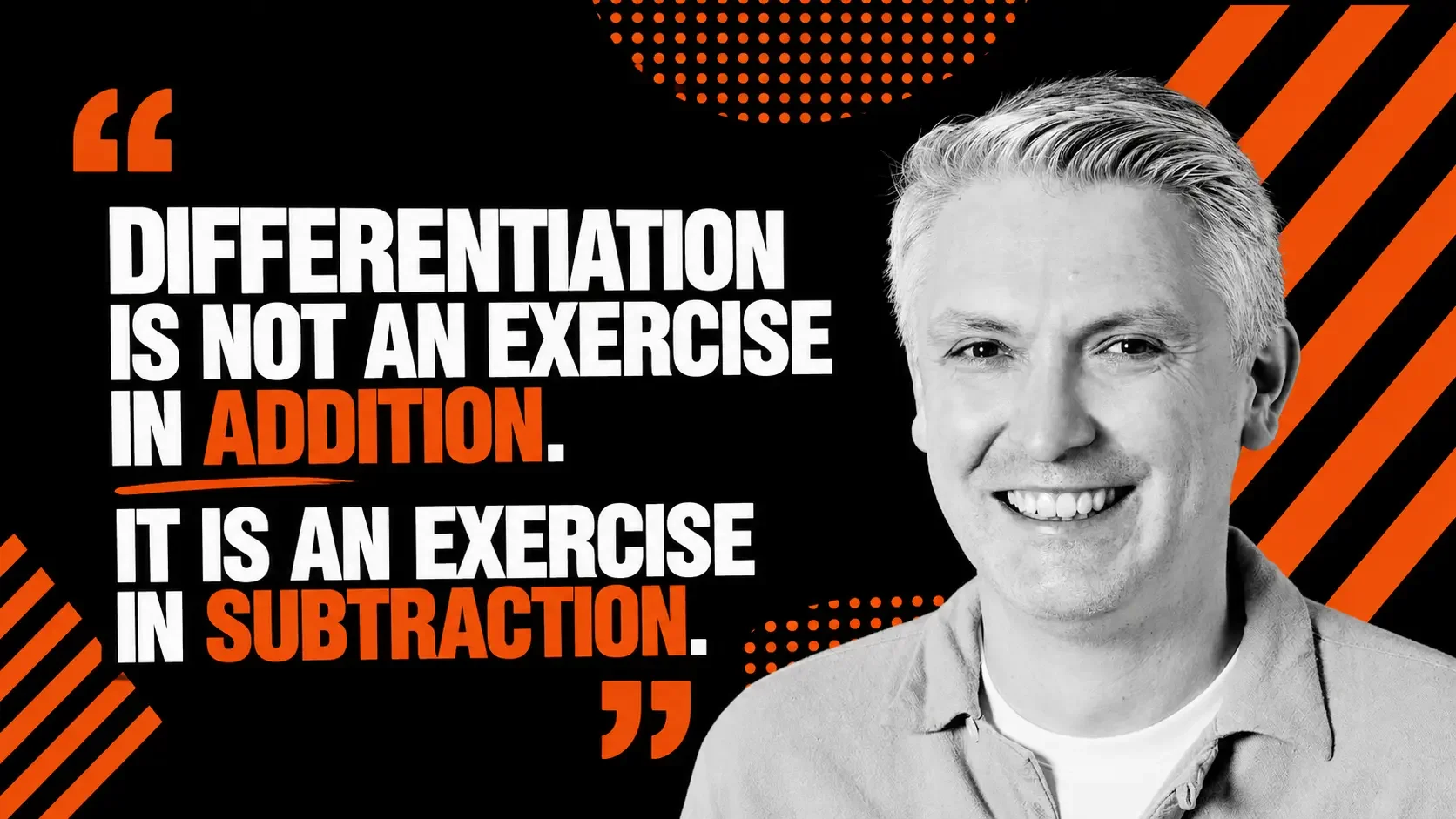
That is the bit many brands miss. Differentiation is not an exercise in addition. It is an exercise in subtraction. The value is not in saying more. It is in giving buyers one clear thing to associate with you. Something they can understand, remember, and repeat.
Which brings us back to B2B tech. “AI-powered”, “trusted”, “innovative”, “customer-centric”, and “future-ready” are not positions. They are the worst kind of wallpaper. They are the things everyone says while trying to sound different.
The real test
The real test, then, for MarTech and AdTech brands is not whether CMOs have heard of you. Not whether they have seen your latest report, product update, or AI announcement.
But can they answer one simple question: Why you?
Until they can, you are not differentiated. You are just part of the noise.
FAQs
-
CMOs want tech vendors that demonstrate genuine thought leadership, bring fresh perspectives to the market, and clearly connect their products to business outcomes.
-
Differentiation helps buyers understand what a brand stands for and why it is relevant. Without it, brands risk blending into category noise.
-
CMOs say unique opinions on the industry are more valuable than product updates, partnership announcements, or compliance-focused content.
-
By focusing on a clear market position, simplifying their messaging, developing original thought leadership, and creating memorable associations in buyers’ minds.