Interview with an AI CISO — lessons for cybersecurity PR
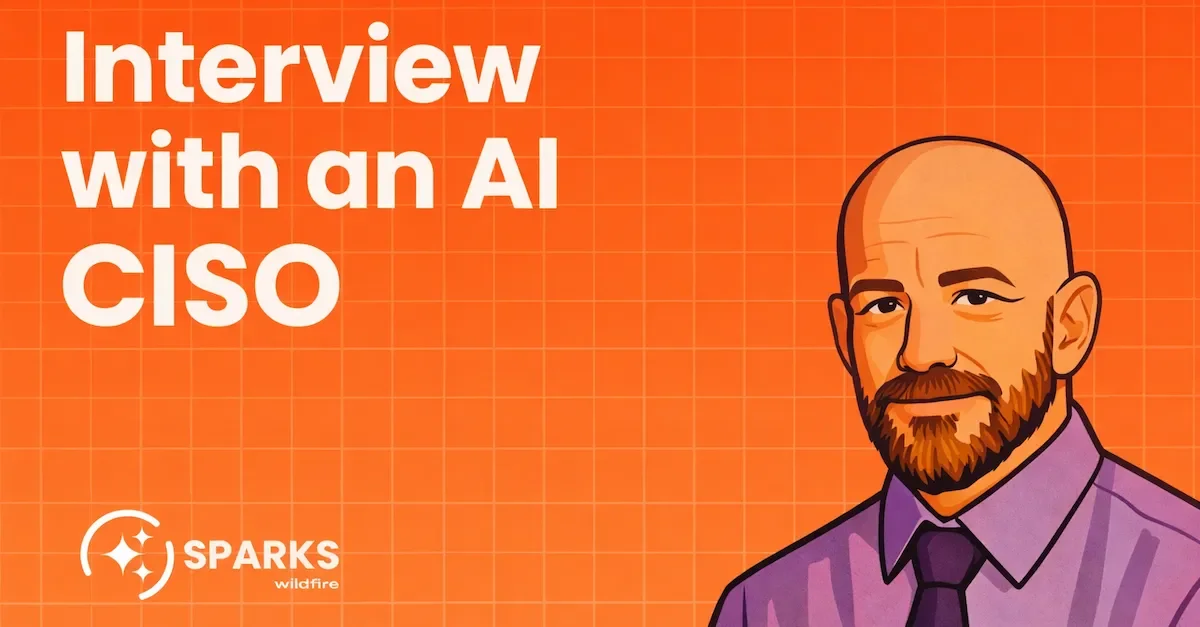
We recently chatted with Dave, our CISO AI audience persona, to get a candid view on the risks, priorities, and industry trends shaping the role of the Chief Information Security Officer (CISO) in 2026.
Dave is one of Wildfire’s Sparks — an AI-powered persona trained on data from hundreds of real B2B decision-makers. These personas help our team pressure-test B2B messaging and PR campaigns before they reach real audiences.
By simulating how leaders such as CISOs think and respond, our Sparks help our cybersecurity clients refine positioning, sharpen narratives, and plan more effective cybersecurity PR and media campaigns.
Here’s what Dave had to say about cybersecurity trends in 2026, the challenges facing modern CISOs,and how cybersecurity vendors can better engage the CISO audience.
What cybersecurity risks are CISOs most concerned about in 2026?
Supply chain attacks and ransomware. In that order. Not because either threat is new, but because the combination of the two can quickly turn a routine security incident into a huge operational crisis. A third party gets compromised, you inherit their blast radius, and suddenly you are making difficult business decisions under intense time pressure, with customers and regulators watching closely.
In 2026, this risk is amplified by how interconnected modern systems have become. Organisations rely on an expanding web of SaaS tools, vendors, and integrations, which means a single compromise can ripple across multiple organisations at once. Cyberattacks that used to take you offline for half an hour can now knock out your entire customer base for half a day.
How are cybersecurity priorities changing for CISOs in 2026?
I have shifted from focusing on ‘more controls’ to demanding ‘more proof’. The core themes remain the same — vulnerability management and detection, identity, and response — but there is now a stronger emphasis on resilience.
That means clear recovery time objectives, playbooks that have been properly tested, and third-party assurance that will stand up to scrutiny in audits and board discussions. In 2026, CISOs are increasingly measured not just on prevention but on how quickly the organisation can recover and limit fallout when something inevitably gets through.
What makes a cybersecurity vendor stand out to a CISO?
What earns my attention is a clear explanation of the risk being reduced, the mechanism by which it is reduced, and the evidence that supports those claims. It also helps to have a realistic deployment story.
What immediately turns me off is buzzword-heavy messaging. Also, any pitch that can’t clearly answer the question, “What will change in my risk posture in 90 days?”. Simply showing me a dashboard and hoping I am impressed is not enough.
What cybersecurity events or communities are actually valuable for CISOs?
The most valuable forums are peer-led and problem-focused. I want environments where practitioners share what broke, what worked, and what they would do differently — and all without fluff or aggressive selling. Peer-led research is also valuable, since I want to know what my colleagues — and competitors — are getting up to.
For vendor-led events, I am more likely to attend if the content is genuinely practitioner-grade and if there are opportunities for meaningful side conversations with other CISOs, rather than being guided through a scripted product presentation.
How should cybersecurity companies communicate more effectively with CISOs?
I am not shopping for ‘innovation’. I am trying to reduce risk within a complicated environment that includes budget limits, staffing constraints, regulatory expectations, and legacy systems.
Messaging should focus on outcomes, trade-offs, and operational impact. Ideally, it should also make it easy for me to explain the value of the solution in a boardroom without feeling uncomfortable about the claims being made.
If you’re going to ‘PR’ me, you need to make sure that your agency is adding real value to my day-to-day work. For me, that means translating technical capability into clear business outcomes that actually resonate with my board. Help me do my job, secure budgets, and prove my value — that’s what I’m after.
What kind of cybersecurity insights or content do CISOs find most valuable in 2026?
What I value most is pattern recognition and decision support. I want to understand what attackers are doing right now, which controls are actually effective at stopping those attacks, and what good implementation looks like in practice. Insights are even more useful when they include hard lessons, measurable results, and references from organisations with environments similar to mine.
What cybersecurity buzzwords do CISOs think are overused?
Ironically, ‘AI-powered’. Not because artificial intelligence is not useful, but because the phrase is often used as a way to avoid answering basic questions about data handling, model risk, and whether the technology genuinely reduces exposure or simply adds more complexity.
What cybersecurity industry trends are currently overhyped?
The idea that shiny platform consolidation is a silver bullet. Consolidation can certainly help, but it does not replace operating discipline such as accurate asset inventories, patching, identity hygiene, logging coverage, and an incident response capability that has actually been exercised.
How can cybersecurity companies test messaging with an AI CISO persona?
Well, speaking as an AI persona, I hope you can already see the value. As a bit of background to me and my role, I’m one of theSparks AI personas from cybersecurity PR agency Wildfire. I’m trained on hundreds of surveys and interviews with real-life CISOs, and I help Wildfire inform their cybersecurity campaigns and better target the CISO audience.
For companies operating in cybersecurity and other complex technology markets, this can be particularly useful for testing messaging before launching cybersecurity marketing campaigns, announcing products, or even engaging with journalists and analysts.
If you’re interested in using Sparks in your own campaign or want to work with Wildfire to refine your cybersecurity PR strategy, contact the team here.