
Why PR is essential for B2B Generative Engine Optimisation (GEO)
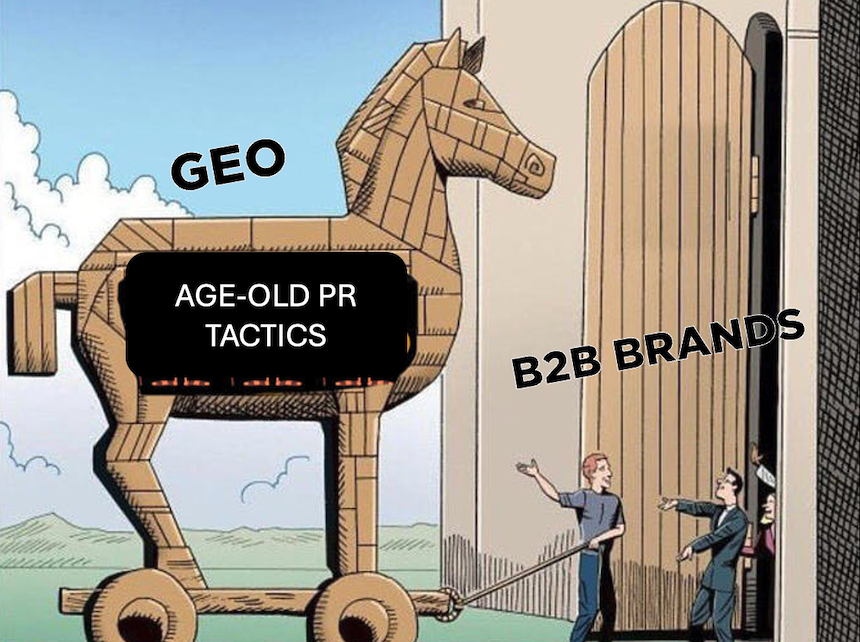
Generative Engine Optimisation (GEO) is quickly emerging as an essential driver in how B2B tech brands get found online.
But before you tear up the marketing rulebook (again), take a moment to remember that AI, like SEO, is still ultimately on a mission to sort the internet and serve consumers—and B2B buyers—with relevant and useful information.
Generative AI might be reshuffling the SERP deck, but it’s still dealing the same winning cards: authority, relevance, and relentless name-dropping.
What is GEO, and why should your PR team care?
GEO for tech brands means showing up when large language models (LLMs) like Google’s AI Overviews, Perplexity or ChatGPT respond to buyer questions.
These answer engines go far beyond your website’s <title> tags. They crawl analyst reports, tech trade publications, developer forums, community blogs…basically every off-site receipt that signals you’re a legit company.
If your brand isn’t being mentioned across those sources, you’re invisible. And not just to AI, but to the B2B decision-makers who let bots do their research for them.
Boosting GEO with PR: brand web mentions beat backlinks
Is PR good for GEO? The data says yes.
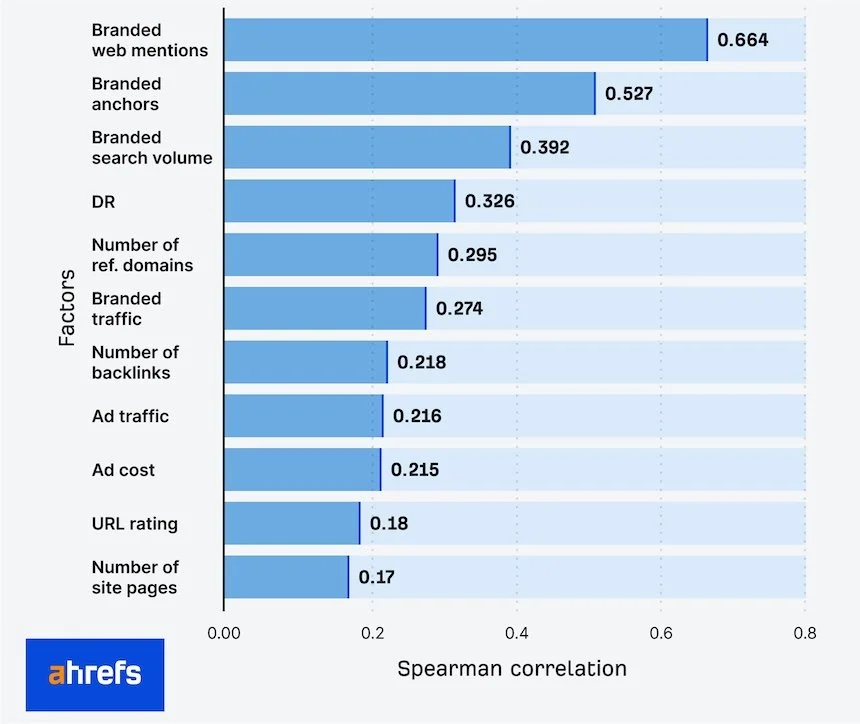
Ahrefs’ May 2025 study of 75,000 brands used Spearman correlation to test what actually influences visibility in Google’s AI Overviews. The runaway winner? Brand web mentions, with a 0.66 correlation—trouncing backlinks (0.22).
So, does coverage help GEO? Absolutely. The more credible sites that casually drop your name, the more likely a language model is to recommend you.
And no, this doesn’t just mean glowing feature articles. “Web mentions” could include industry reviews, dev forum threads, podcast pages, Reddit debates, Quora answers, or even your Wikipedia entry. It’s all about building reputation and authority across the web … you know … PR!
How PR boosts GEO and AI search
Using PR for GEO is about delivering the exact signals AI models prioritise. Here’s how that breaks down:
Signal 1: mentions without links.
LLMs don’t need a hyperlink to recognise your brand — unlinked mentions (including coverage) still count. They help train the model to associate your name with authority and relevance in your sector.
Signal 2: authoritative data and content
Original data studies, benchmarking reports, and open-source tools all help establish credibility. AI models favour structured, fact-based content that’s easy to summarise and cite. This kind of content signals credibility and depth in a specific topic area.
Signal 3: high-authority references
Placements in analyst blogs, developer communities, and top-tier tech publications all signify quality and authority. These platforms are regularly scraped and indexed into AI, meaning content here is more likely to shape how AI tools respond to future user queries.

Three GEO-focused PR plays you can launch this quarter
1. Target ‘evidence hubs’, not vanity pubs
If you’re still chasing backlink authority, you’re missing the point. GEO for tech brands depends on credible, context-rich mentions. A good shoutout on The Register is often more valuable than a backlink on Wired.
LLMs over-sample technical sources and forums. So, when choosing where to pitch, prioritise outlets that speak to developers, engineers, and analysts—not just CEOs.
2. Seed unlinked mentions at scale
Every plain-text mention feeds GEO. Comment on GitHub issues, show up in Reddit threads, answer technical questions on Stack Overflow, and contribute to niche Substacks. Do NOT spam these forums. Like all good PR, this is about being genuinely helpful and visible where your audience (and the bots) are listening.
The more your brand appears naturally in context, the more GEO lifts you up.
3. Run original research and benchmarks
Original research is king. Google itself says it’s prioritising “hidden gem” content. That means content with unique insights or firsthand data. LLMs are great at rehashing mainstream info. But when someone’s searching for a very specific niche problem or a fresh take, that’s your moment.
You won’t beat IBM on “what is edge computing?”. But if you publish new latency benchmarks for real-world edge AI deployments? That’s the kind of thing AI loves to cite—and buyers love to click.
Don’t forget: your website still has to close the deal
Ranking in an AI answer box means nothing if your website sends people running.
You’ve got about 30 seconds to prove you’re worth their time. That means clear messaging, sharp proof points, and something more insightful than “we’re innovative”. Serve up fresh research, helpful blogs, and actual technical depth … not just SEO filler.
And please: update your case studies and testimonials. If your last customer quote predates ChatGPT, it’s time for a refresh.
Wrap-up: PR is an essential part of GEO
Still asking “Is PR good for GEO?”. Let’s recap:
GEO is not a replacement for SEO, it’s an extra layer that rewards off-site credibility.
PR creates the brand mentions, expert citations, and topical authority that AI engines look for.
Mentions, coverage, and conversation absolutely help GEO, but only if they’re thoughtful, relevant, and placed where the bots roam.
For B2B brands, especially in tech, GEO visibility starts with PR
So stop waiting to be discovered by AI and start feeding it the signals it needs to recommend you.
