Creative marketing campaigns: why the audience at Contagious last night got it wrong
I’ve only recently discovered it, but I really love Contagious. If you’ve never heard of it, Contagious runs an event where some of the best minds in marketing talk about some of the most creative marketing campaigns they’ve worked on. There’s pizza and beer, but that’s not the only reason I like going. The reason I go is because the creativity on show is genuinely amazing.
One particular section of the event I enjoy involves two or three marketers going head to head against each other, presenting their creative marketing campaigns to the audience who then vote for their favourite.
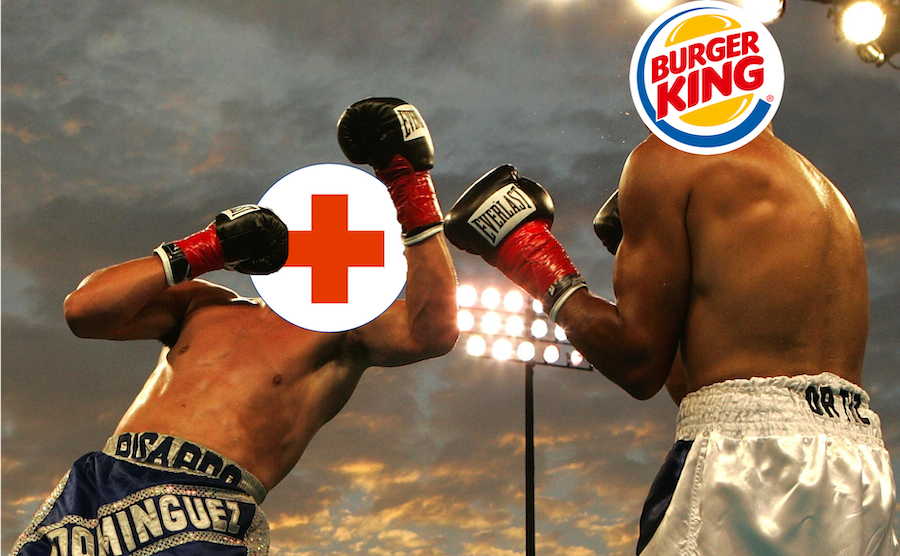
Last night, it was Burger King versus The Japanese Red Cross Society. The latter won the vote of the audience, but I want to argue the casefor the former, whose campaign was, to me, a more successful campaign becauseit actually achieved what it set out to achieve.
#BPM100
Let me start with the Red Cross’s campaign.
The Red Cross had cottoned on to a problem when medicalreports earlier in 2019 found that Japan’s survival rate for cardiac arrest waslow in comparison to other countries. The report concluded that many victims of cardiac arrest could’ve been saved if they had received CPR.
The society therefore put their creative minds to work toraise awareness of the importance of CPR and get people to learn it — especially among young people where awareness levels were dangerously low.
The idea they came up with was creative ingenuity. UsingTikTok, a social video app where users can share short videos, the society challenged people to perform a dance sequence to a song of 100 beats per minute (bpm) as a way to practice the five CPR steps: evaluate the scene, call for help, check for breathing, interlock the fingers and perform chest compressions. And thus the #BPM100 campaign was born.
By most campaigns’ standards, the uptake of the challengewas huge. The campaign went viral, racking up 30.2 million views and 1.51million likes within two months of its launch — “an unprecedented level of engagement for a CPR campaign”, the organisation’s press release on the wire said. Moreover, at the last count, the campaign had exceeded more than a billion impressions online.
The silent drive-thru
Now on to Burger King’s campaign.
Burger King, a global brand, had noticed that sales in Finland weren’t quite performing. The company then set out to find out why.
Through doing audience research, the organisation learned quite how introverted Finns tend to be in comparison to customers from other nations.
And let’s face it Burger King’s brand is pretty extroverted. In the US, surrounded by a fairly extroverted culture with loud and brash sportspeople, “musicians” and Donald Trump, an extroverted approach to branding might work well for anAmerican audience. But abroad, with a fairly quiet and calm Finnish audience, Burger King’s brand, with its fiery nature and loud deep voiceover on its adverts, wasn’t quite washing.
So Burger King did what all great global brands do when theyhad a bit of a brand problem — they adapted their approach within the confinesof the company’s positioning of Have it your way.
Burger King therefore launched the silent drive-thru, where customers would place their order via an app, and collect their order through the designated silent drive area, where a member of stafffrom Burger King would pass them their meal without uttering a word.
The results? The company saw a 45% increase in app downloads and sales through the app have doubled each month through since the launch of the campaign.
There was only one clear winner…
For me, Burger King won this hands down. While the #100BPM campaign generated more coverage, more impressions, more likes and more “buzz” (eughh), only the silent drive-thru actually achieved what it set out to achieve, which was to sell more burgers.
I’m not saying that by comparison the Red Cross’s campaign was bad or less creative — my problem with the campaign was that we didn’t find out if it actually worked. Do more people in Japan now know CPR? Do kids actually understand that the lovely dancing in the videos actually had a point beyond just dancing? Has there been a noticeable increase in the number of survivals of cardiac arrest in Japan since the campaign launched?
I don’t know because the presenter didn’t tell us. Instead, she focused mainly on vanity metrics and showed us the praise the campaign got in the marketing media, which is beside the point because how many Japanese kids read AdAge? But when asked why the judges also picked The Japanese Red Cross Society’s campaign as the winner, one said: “because of the Red Cross’s contribution to society.”
Facepalm.
Of course we can argue that The Red Cross has a better moral purpose in life than Burger King. But that’s not what we’re judging here — we’re judging which campaign was more effective at achieving something. I really couldn’t give two hoots about how many billion impressions or how many hundreds of pieces of coverage your campaign generates. If you can’t demonstrate that your creative marketing campaigns effect the change you want them to, you can’t call them a success.